The Influence of E-Wallets on the Consumptive Behavior Generation Z: Systematic Review
DOI:
https://doi.org/10.54518/ebh.4.2.2025.638Keywords:
Consumptive Behavior, Digital Finance, E-Wallets, Purchasing BehaviorAbstract
This study investigates the impact of e-wallet usage on the consumer behavior of Generation Z, a demographic group that is rapidly embracing digital financial technologies. As digital payment systems become increasingly integrated into daily life, especially for tech-savvy young consumers, concerns have emerged regarding their influence on financial decision-making and spending habits. E-wallets offer ease, speed, and convenience, which may lead users particularly Generation Z to engage in more frequent and impulsive purchasing behavior. Through a systematic review of existing empirical studies, this research analyzes patterns and trends in the relationship between e-wallet adoption and consumptive behavior. The findings consistently demonstrate a significant positive correlation between the frequency of e-wallet usage and an increase in consumer spending. Key factors such as user-friendly interfaces, real-time transactions, digital promotions, and perceived security are identified as major drivers behind this trend. Additionally, the review highlights the dual nature of e-wallets: while they promote financial inclusion and accessibility, they also pose risks related to financial discipline. The study concludes by emphasizing the need for enhanced financial literacy, responsible digital behavior, and strategic interventions to ensure that e-wallet usage supports rather than undermines the long-term financial well-being of Generation Z.
References
Chatterjee, S., & Kumar, A. (2020). Consumer acceptance of mobile wallet: An empirical study in India. Journal of Asia Business Studies, 14(2), 185–200.
Khasanah, U., & Sasana, H. (2022). Empirical relationship between gender equality and socio-economic developments: An error correction model. Arthatama, 6(1), 12-25.
Kim, S., & Choi, M. (2023). The role of digital nudges in promoting financial discipline among young consumers. Computers in Human Behavior Reports, 9(4), 100235.
Lestari, R., Suryani, T., & Fahlevi, H. (2021). Impact of e-wallet promotional features on online shopping behavior. International Journal of Data and Network Science, 5(3), 271–278.
Liu, Y., Luo, J., & Zhang, L. (2021). The effects of mobile payment on consumer behavior. Journal of Consumer Behaviour, 20(3), 512-520.
Marpaung, C. R., Za’im Tsabit, I. A., & Pangestuti, I. R. D. (2024). The role of Gen-Z in supporting sustainable development through green economy towards Golden Indonesia 2045. Research Horizon, 4(4), 315-320.
Mustafa, S., Zhang, W., Anwar, S., Jamil, K., & Rana, S. (2022). An integrated model of UTAUT2 to understand consumers' 5G technology acceptance using SEM-ANN approach. Scientific Reports, 12(1), 20056.
Rahi, S., Ghani, M. A., & Alnaser, F. M. (2022). The role of financial literacy in digital banking usage. International Journal of Bank Marketing, 40(2), 263–282.
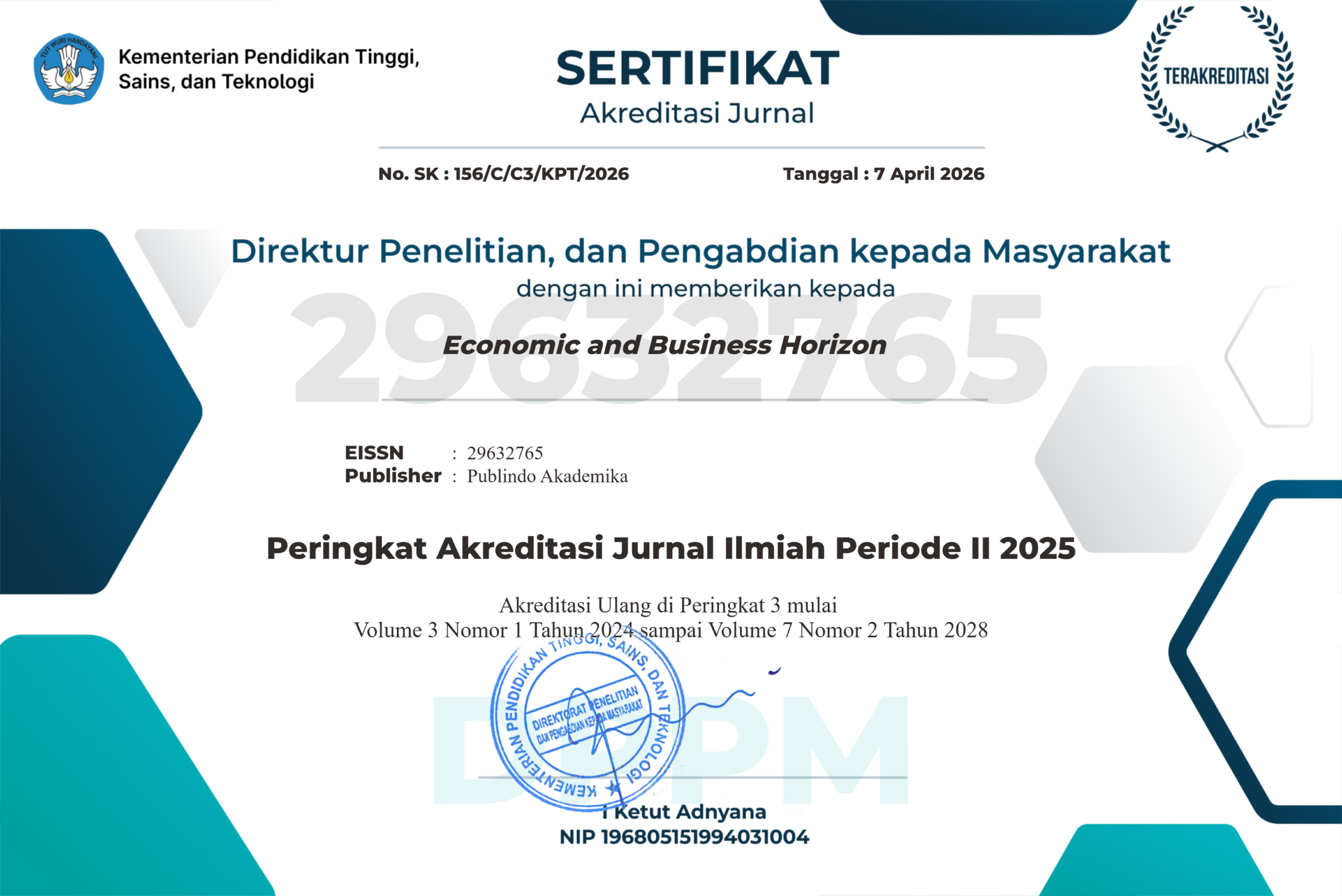
Suparjo, S., & Dana, Y. A. (2024). The Role of Corporate Social Responsibility and Reputation Management in Global Marketing Success. Economic and Business Horizon, 3(3), 102-107.
Thaler, R. (1985). Mental accounting and consumer choice. Marketing Science, 4(3), 199–214.
Wang, Y., Ma, F., & Liu, C. (2021). Impulse buying in the age of mobile payment: The role of mobile payment convenience and impulsiveness. Journal of Retailing and Consumer Services, 63(2), 102732.
Yeo, V. C. S., Goh, S. K., & Rezaei, S. (2021). Consumer experiences, attitude, and behavioral intention toward e-wallets. Journal of Retailing and Consumer Services, 58(4), 102314.

Downloads
Published
How to Cite
Issue
Section
License

This work is licensed under a Creative Commons Attribution-ShareAlike 4.0 International License.