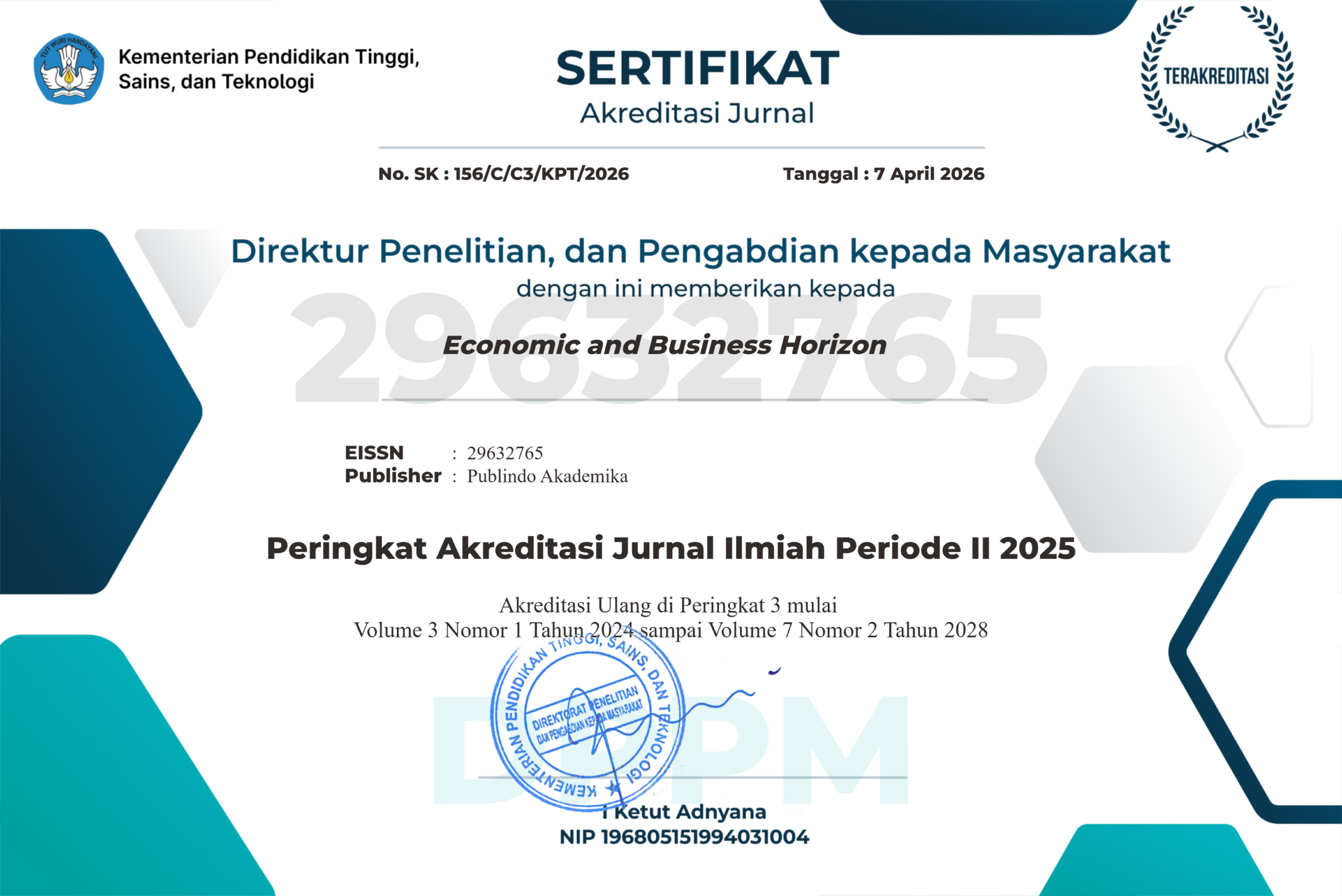
The Effect of Career Development, Skills, and Job Evaluation on Employee Retention
DOI:
https://doi.org/10.54518/ebh.5.2.2026.1102Keywords:
Career Development, Job Evaluation, Retention, SkillsAbstract
High turnover can disrupt operations, reduce service quality, and increase recruitment and training costs. Therefore, appropriate managerial strategies are essential to improve retention and support optimal healthcare facility operations. The purpose of this study was to determine the influence of career development, skills, and job evaluation on employee retention. This study aimed to examine the influence of career development, skills, and job evaluation on employee retention. A quantitative research approach was employed using a structured questionnaire distributed to 149 employees. Data were analyzed using multiple linear regression with SPSS. The results showed an F-test value of 0.000, meaning that career development, skills, and job evaluation together have a significant influence on employee retention. In addition, the T-test results obtained job evaluation (Sig. 0.000), skills (Sig. 0.000), and career development (Sig. 0.067). It was concluded that there was a significant influence of job evaluation and skills. Meanwhile, career development did not have a significant effect on employee retention. The study implies that hospital management should prioritize continuous training programs, competency enhancement initiatives, and objective performance evaluation systems to strengthen employee retention and maintain the quality and stability of healthcare services.
References
Allen, N., & Meyer, J. (1990). The measurement and antecedents of affective, continuance, and normative commitment to the organization. Journal of Occupational Psychology, 63(1), 1–18.
Bella, N., Susanti, E., & PHN, R. (2024). Faktor-faktor yang mempengaruhi retensi karyawan di Rumah Sakit Islam Ibnu Sina Padang Panjang tahun 2023. MARAS: Jurnal Penelitian Multidisiplin, 2(2), 1045–1052.
Cloutier, O., Felusiak, L., Hill, C., & Pemberton-Jones, E. J. (2015). The importance of developing strategies for employee retention. Journal of Leadership, Accountability & Ethics, 12(2).
Cogin, J. A., Ng, J. L., & Lee, I. (2016). Controlling healthcare professionals: how human resource management influences job attitudes and operational efficiency. Human Resources for Health, 14(1), 55-67.
Damei, M. (2020). The effect of job training on employee retention in Somalia. Journal of Research in Business and Management, 8(1), 8–17.
Elsafty, A., & Oraby, M. (2022). The impact of training on employee retention: An empirical research on the private sector in Egypt. International Journal of Business and Management, 17(5), 58-74.
Evanda, M. I., Samosir, M. A., Ambarita, J. H., & Rambe, B. H. (2025). Inovasi dan evaluasi manjemen Rumah Sakit Umum Daerah Labuhan Batu Bara. Derivatif (Jurnal Manajemen Ekonomi dan Akuntansi, 1(2), 19–27.
Friska, R., Pramono, A. J., Susanto, H., Akbar, B., & Suwarno, S. (2023). Empirical study of the effect of career development on auditor performance in public sector in Indonesia. Research Horizon, 3(3), 133–150.
Hendriyulianti, D. A. (2025). Pengaruh pengembangan karir terhadap retensi karyawan dengan kepuasan kerja sebagai intervening Dinas PUPR Provinsi Jambi. MASMAN (Master Manajemen), 3(3), 117–128.
Imelda, D. Q., & Budiarti, I. N. (2023). Pengaruh pengembangan karir dan lingkungan kerja non fisik terhadap retensi karyawan. Fair Value (Jurnal Ilmiah Akuntansi dan Keuangan), 6(1), 21–28.
Jelita, S. P., & Srimulyani, V. A. (2022). Dampak pengembangan karir dan lingkungan kerja terhadap peningkatan retensi karyawan. Jurnal Riset Manajemen dan Akuntansi, 10(2), 153–162.
Khilwan, A. (2023). Faktor-faktor retensi karyawan di Rumah Sakit Muhammadiyah Mardhatillah Pemalang pada tahun 2022. Indonesian Journal of Hospital Administration, 6(2), 63–70.
Kiazad, K., Holtom, B. C., Hom, P. W., & Newman, A. (2015). Job embeddedness: a multifoci theoretical extension. Journal of Applied Psychology, 100(3), 641-662.
Kristia, N., & Arnida, P. (2024). Pengaruh komitmen organisasional, stres kerja, dan kompensasi terhadap retensi perawat di Rumah Sakit Umum Sinar Husni Medan. Jurnal Widya, 5(1), 1584–1599.
Marwanto, R. (2022). Eksplorasi work engagement dalam meningkatkan fluorishing pada tenaga kesehatan di Rumah Sakit PKU Muhammadiyah Sruweng. Jurnal Impresi Indonesia, 1(8), 883–900.
Mayasari, N., Triana, N., Mulyadi, D., Dinarwati, S., Estiana, R., Suratman, Soekirman, A., & Suhara, A. (2025). Manajemen sumber daya manusia: Pengukuran kinerja, retensi talenta, dan diversitas. Bandung: Widina Media Utama.
Melisa, Syafutri, D. D., Salsabilah, S. H., & Mulyadi. (2025). Pengaruh lingkungan kerja dan kompensasi terhadap retensi karyawan. Jurnal Ekonomi, Manajemen, Akuntansi dan Keuangan, 6(3), 1–12.
Mobley, W. (1977). Intermediate linkages in the relationship between job satisfaction and employee turnover. Journal of Applied Psychology, 6(2), 237–240.
Nasir, N. (2020). Manajemen sumber daya manusia: Pengadaan dan retensi. Bandung: Universitas Pendidikan Indonesia.
Nelson, A., & Apriyana, T. (2024). Faktor-faktor yang mempengaruhi retensi karyawan di rumah sakit di Kota Batam. EKUILNOMI (Jurnal Ekonomi Pembangunan), 6(2), 386–397.
Nurmalitasari, S. (2021). Pengaruh pelatihan, pengembangan karir, dan work-life balance terhadap retensi karyawan dengan kepuasan kerja sebagai variabel pemediasi. Diponegoro Journal of Management, 10(3), 1–15.
Pradipta, P. S. A., & Suwandana, I. G. M. (2019). Pengaruh kompensasi, kepuasan kerja, dan pengembangan karir terhadap retensi karyawan. E-Jurnal Manajemen, 8(4), 2409–2437.
Raharjo, I. B., Albashori, M. F., Widiyanti, A., Wahyudiyono, & Suliantoro. (2025). Strategi retensi karyawan berbasis employee engagement. Jurnal Lentera Bisnis, 14(2), 2351–2363.
Raynor, C. J. (2025). Strategies to improve employee retention and organizational performance in healthcare. Minnesota: Walden University (Doctoral Dissertation).
Risa, F. N., & Endratno, H. (2023). Pengaruh retensi karyawan, gaya kepemimpinan transformasional dan kompensasi terhadap keinginan berpindah kerja perawat RSUD Dr. M. Ashari Pemalang. Jurnal Ilmiah Mahasiswa Manajemen, 5(1), 34–43.
Sawitri, N. N., Susanto, P. C., Suroso, S., & Sihombing, S. (2023). Business Opportunity Human Resource Information System for a Human Resource Department to Create Career Path and Performance Evaluation. East Asian Journal of Multidisciplinary Research (EAJMR), 2(4), 1505-1516.
Sofianti, I. D., & Susanto, A. (2024). Pengaruh motivasi kerja dan pengembangan karier terhadap retensi karyawan Gen Z melalui komitmen karyawan. Assets Journal (Management, Administration, Economics, and Accounting, 2(2), 60–67.
Supic, Z. T., Bjegovic, V., Marinkovic, J., Milicevic, M. S., & Vasic, V. (2010). Hospital management training and improvement in managerial skills: Serbian experience. Health Policy, 96(1), 80-89.
Susanto, P. C., Sugiyanto, S., Rachman, S., Saepudin, T. H., & Ismail, D. H. (2024). Human resource management concepts: Recruitment, job analysis, job evaluation, remuneration and organizational development. Greenation International Journal of Law and Social Sciences, 2(3), 88-104.
Violetta, V., & Edalmen, E. (2020). Pengaruh kompensasi terhadap retensi karyawan dengan kepuasan kerja sebagai variabel mediasi. Jurnal Manajerial dan Kewirausahaan, 2(4), 1086–1095.
Wenzel, A. K., Krause, T. A., & Vogel, D. (2019). Making performance pay work: The impact of transparency, participation, and fairness on controlling perception and intrinsic motivation. Review of public personnel administration, 39(2), 232-255.
World Health Organization. (2020). Retention of the health workforce in rural and remote areas: A systematic review. Geneva: World Health.
Wulandari, N., & Athoillah. (2025). The Effect of compensation and career development on job hopping in the banking sector. Research Horizon, 5(4), 1075–1088.

Downloads
Published
How to Cite
Issue
Section
License
Copyright (c) 2026 Muhammad Chairul, Rian Andriani, Rinawati Rinawati

This work is licensed under a Creative Commons Attribution-ShareAlike 4.0 International License.